Modern Foreign Languages

Skills
As each new topic is covered students gain additional vocabulary, along with grammatical structures enabling them to understand and communicate effectively in the four skills areas (listening, speaking, reading and writing). Further to this, students also develop a range of transferrable, cross-curricular skills through the study of MFL. These include but are not limited to: cultural awareness, literacy, phonics, numeracy, memorisation techniques, description, narration and inferring meaning.
Character
A number of character traits are developed through the study of MFL. For example, language learning requires a great deal of open-mindedness. Students are exposed to the culture of target language speaking countries, encouraging them not only to be well-informed global citizens, but also respectful and tolerant of the many cultural differences apparent in today’s society. Additionally, languages instil resilience in students and allow them to take risks in their learning. Even in their mother tongue they make errors with their use of language, therefore accepting this as both a natural and important part of the learning process is essential.
Experiences
Every student will experience a curriculum that helps them linguistically but also culturally. Students will have exposure to authentic materials through a variety of stimuli which may include: video clips, music, pen pal exchanges, native speaking teachers and educational visits. There are also numerous opportunities to be involved in extra-curricular activities and competitions.
Criticality
Through the study of languages students are encouraged to think in a variety of ways. They must think logically and analytically to apply their knowledge of grammatical patterns to help them deduce meaning in reading, listening and translation tasks. Moreover, they must think creatively in order to use and manipulate the structures and vocabulary they have learnt to express themselves clearly in spoken and written work.
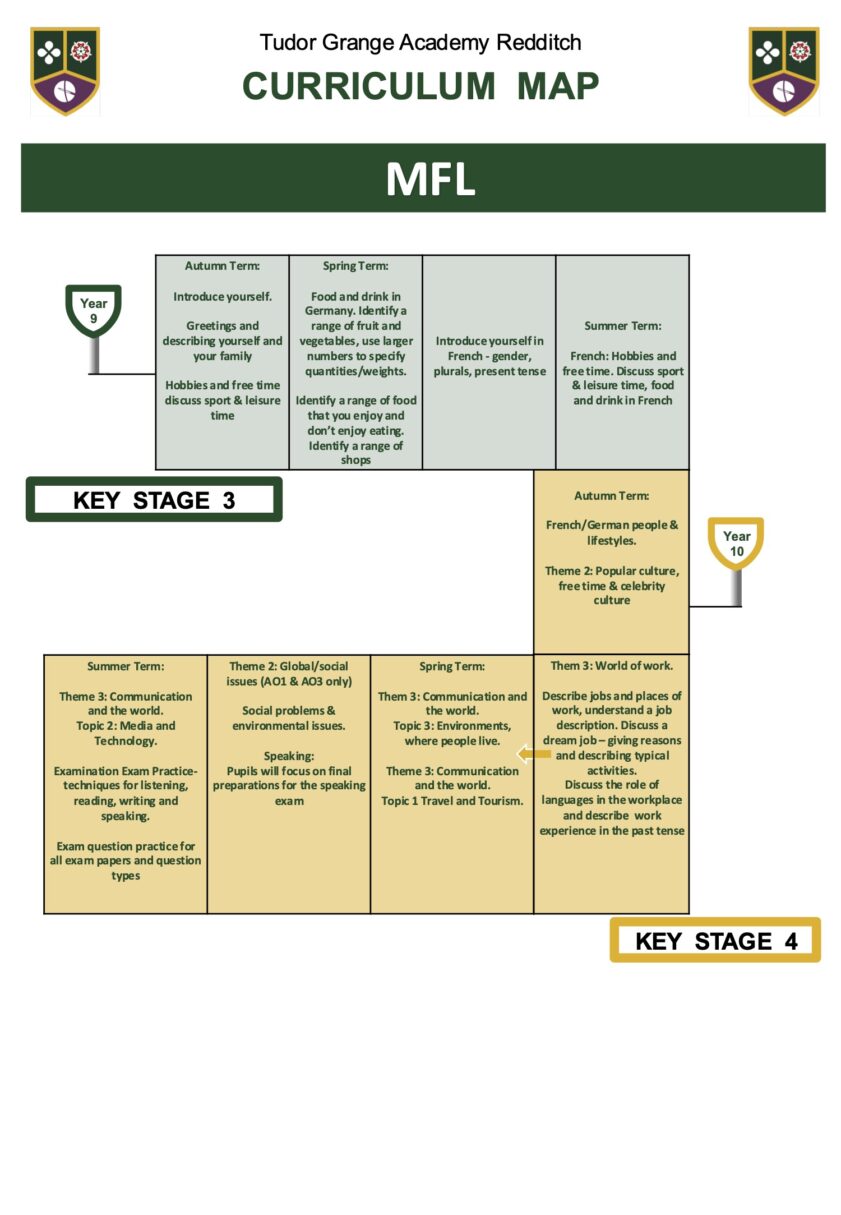
Curriculum Map